









Introduction
The recent berwickshire tap water warning created major disruption across the Scottish Borders after problems at a local treatment facility left thousands of residents dealing with unsafe water concerns, low pressure, and interrupted supply. Families rushed to buy bottled water, businesses struggled to continue operations, and communities waited for updates as emergency repair teams worked to stabilize the situation.
What began as a technical failure quickly became a serious public issue affecting homes, schools, shops, restaurants, and farms throughout the region. The incident also raised fresh concerns about the condition of water infrastructure in parts of the UK.
What Caused the Berwickshire Tap Water Warning?
The berwickshire tap water warning was issued after a fault was discovered at the Rawburn Water Treatment Works near Duns. The failure affected water quality and disrupted normal supply across nearby towns and villages.
Scottish Water confirmed that operational problems at the treatment plant forced authorities to issue a safety warning while engineers investigated the issue. Residents in affected areas were told not to drink tap water until testing confirmed that supplies were safe again.
Many households reported unusual water conditions before the official announcement. Some experienced cloudy or discolored water, while others noticed sudden pressure drops or complete supply interruptions.
The incident highlighted how dependent surrounding communities are on a single treatment system. Once the plant experienced technical problems, the effects spread rapidly across the region.
Areas Affected During the Water Crisis
Several communities across Berwickshire were impacted during the disruption. Areas affected by the berwickshire tap water warning included:
- Duns
- Coldstream
- Chirnside
- Eccles
- Burnmouth
- Coldingham
- Swinton
- Leitholm
- Paxton
- Whitsome
- Birgham
- Lamberton
- Drone Hill
Thousands of homes experienced problems linked to the warning, while hundreds temporarily lost access to running water altogether.
For rural communities, the disruption became even more difficult because access to emergency supply points often required travel.
Health Advice Issued to Residents
Authorities released strict public guidance after the berwickshire tap water warning was announced.
Activities Residents Were Told to Avoid
People in affected areas were advised not to:
- Drink tap water
- Cook using tap water
- Brush teeth with tap water
- Prepare baby formula
- Wash salads or uncooked food
- Make ice cubes using tap water
These restrictions remained active until water quality testing showed the supply was safe for public use again.
Why the Warning Was Taken Seriously
Water safety warnings are issued when there is a risk that untreated or contaminated water may affect public health. Even short-term contamination concerns can create serious risks for children, elderly residents, and people with weakened immune systems.
Because of those risks, authorities acted quickly to limit public exposure while repair work continued.
Bottled Water Shortages Across Local Stores
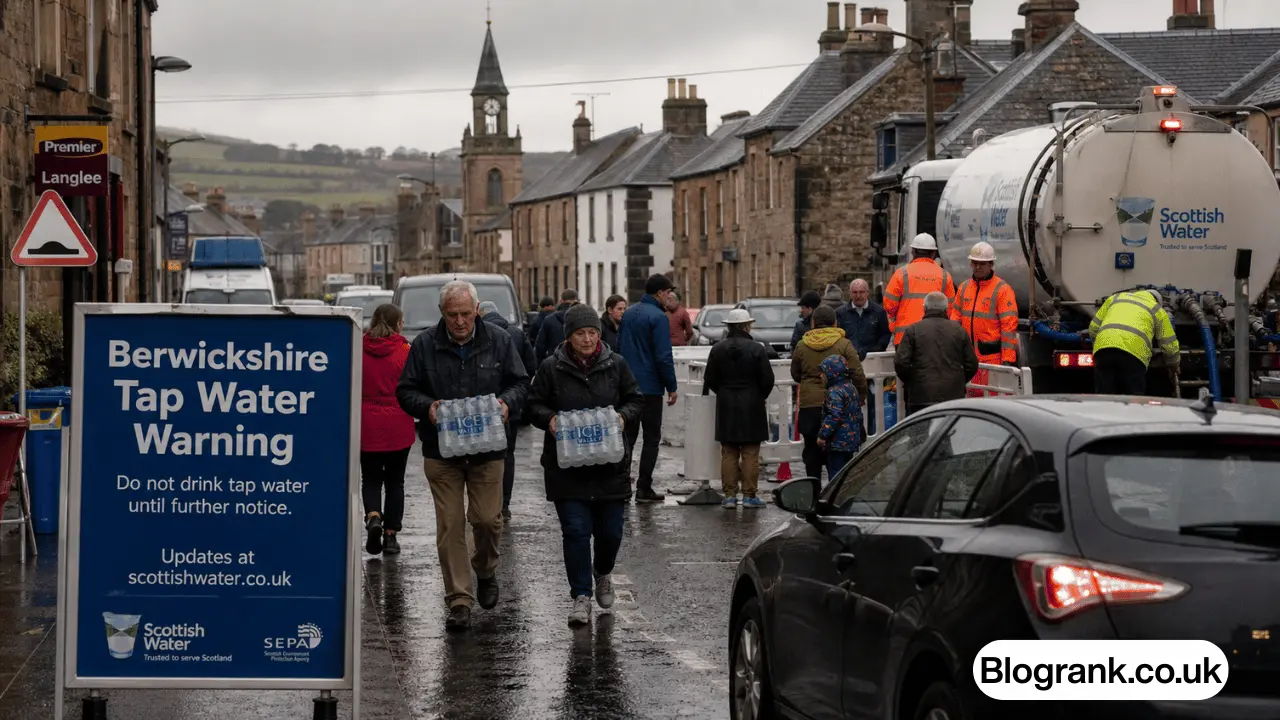
One of the immediate effects of the berwickshire tap water warning was panic buying across local supermarkets and convenience stores.
Within hours of the announcement, bottled water shelves were emptied in several towns. Residents rushed to secure drinking water for their families as uncertainty spread throughout the area.
Some people traveled outside their local communities after nearby stores ran out of stock. Long queues formed at emergency water distribution centers set up by authorities.
The situation showed how quickly supply chains can come under pressure during basic utility emergencies.
Impact on Businesses and Daily Life
The disruption created major operational problems for local businesses across Berwickshire.
Restaurants and Cafés
Food businesses faced immediate hygiene and safety concerns. Many cafés and restaurants could not safely prepare meals or beverages because of restrictions linked to the berwickshire tap water warning.
Some businesses reduced operating hours, while others temporarily closed until the situation improved.
Salons and Cleaning Services
Hair salons, laundries, and cleaning companies also faced challenges because daily operations depend heavily on clean water access.
Farming and Agriculture
Agricultural businesses experienced additional pressure during the disruption. Farms rely on stable water supply for livestock, equipment cleaning, and daily operations.
For many small businesses, even a short interruption created financial losses and scheduling problems.
Scottish Water Emergency Response
Scottish Water deployed emergency teams to restore services as quickly as possible after the berwickshire tap water warning was issued.
Repair Work at the Treatment Plant
Engineers worked continuously at the Rawburn Water Treatment Works to identify the fault and stabilize the system.
Temporary operational measures were introduced to improve supply conditions while repairs continued.
Emergency Water Distribution
Authorities opened bottled water collection points for residents across affected communities. Water tankers and temporary support systems were also used in some areas.
The response helped reduce pressure on local stores after bottled water demand surged during the first days of the crisis.
Communication Challenges
While some residents appreciated the emergency efforts, others criticized delays in communication and inconsistent updates during the early stages of the incident.
Many people said clearer information would have reduced confusion and panic buying.
Growing Concerns About Water Infrastructure
The berwickshire tap water warning has renewed debate around the condition of ageing water infrastructure in the UK.
Across the country, water systems face increasing pressure from:
- Older treatment facilities
- High maintenance costs
- Climate-related stress
- Population growth
- Increased demand during warmer seasons
When one major treatment plant experiences failure, nearby communities can lose access to safe water very quickly.
The Berwickshire incident demonstrated how fragile some local supply systems can become when backup capacity is limited.
Community Support During the Crisis
Despite the disruption, many residents supported neighbors and vulnerable families throughout the emergency.
Community groups helped deliver bottled water to elderly residents and people unable to travel to collection centers. Local businesses also stepped in to support affected households where possible.
In smaller villages, residents used social media groups and local messaging networks to share updates, transport arrangements, and supply information.
The community response helped many people manage the uncertainty during the most difficult period of the disruption.
What Residents Were Told to Do After Restrictions Ended
Once testing confirmed that water supplies were safe again, residents received advice on returning to normal usage safely.
Recommended Safety Steps
People were advised to:
- Run cold taps for several minutes
- Dispose of ice made during the warning
- Clean water-connected appliances
- Replace water filters if needed
These steps helped remove any remaining stagnant water from household systems.
Why the Berwickshire Tap Water Warning Matters
The berwickshire tap water warning became more than a local utility issue. It exposed how dependent communities are on reliable infrastructure and how quickly daily life can be disrupted when essential services fail.
The incident also showed the importance of emergency planning, public communication, and investment in water treatment systems capable of handling technical failures without widespread disruption.
For residents across the Scottish Borders, the crisis served as a reminder that access to safe drinking water cannot be taken for granted.
FAQs
1. What caused the berwickshire tap water warning?
The warning was issued after a fault occurred at the Rawburn Water Treatment Works near Duns, affecting water quality and supply stability.
2. Which towns were affected by the berwickshire tap water warning?
Areas including Duns, Coldstream, Chirnside, Eccles, Burnmouth, and nearby communities experienced disruption.
3. Was the tap water dangerous to drink?
Residents were advised not to drink or cook with tap water until testing confirmed the supply was safe again.
4. How did Scottish Water respond?
Scottish Water sent emergency repair teams, opened bottled water distribution centers, and worked to restore normal service.
5. Did local businesses suffer during the disruption?
Yes. Restaurants, salons, farms, and other businesses experienced operational problems and financial disruption during the crisis.
You May Also Read: Falkirk Pavement Parking Ban: Rules, Fines, Enforcement and Exemptions Explained