









Introduction
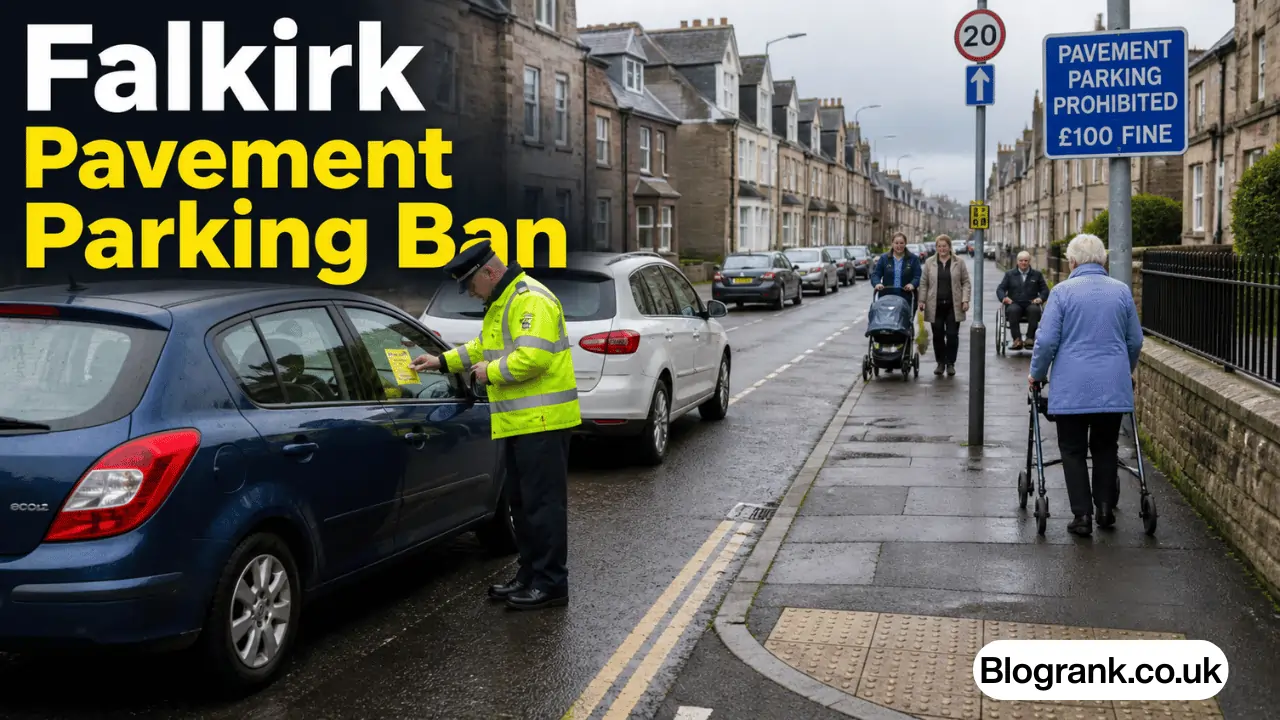
The introduction of the falkirk pavement parking ban has changed how drivers park across the area, especially in older residential streets where space has always been limited. What was once common practice in many neighbourhoods can now lead to financial penalties and enforcement notices.
The changes are part of Scotland’s wider crackdown on unsafe parking practices under the Transport (Scotland) Act 2019. Falkirk Council moved ahead with full enforcement after a public awareness period, warning drivers that parking on pavements, blocking dropped kerbs, or double parking could result in fines.
The issue has created strong debate locally. Some residents support stricter rules to improve pedestrian safety, while others believe the area lacks enough parking infrastructure to support the changes properly.
What Is the Falkirk Pavement Parking Ban?
The falkirk pavement parking ban is a local enforcement policy introduced under Scottish legislation designed to stop vehicles from obstructing pavements and pedestrian access routes.
Under the rules, drivers cannot:
- Park with wheels on the pavement
- Double park beside another vehicle
- Block dropped kerbs
- Leave vehicles too far from the roadside edge
The law applies even if:
- the driver remains inside the vehicle
- hazard lights are switched on
- the stop is temporary
Many motorists wrongly assume partial pavement parking is allowed in tight streets, but enforcement officers can still issue penalties even if only part of the vehicle blocks pedestrian space.
Why Falkirk Introduced the New Parking Rules
The main reason behind the policy is pedestrian safety.
For years, residents complained about blocked pavements making movement difficult for wheelchair users, blind pedestrians, elderly residents, and parents using pushchairs. In some cases, pedestrians had to move into active traffic lanes because pavements were completely obstructed by parked cars.
Accessibility groups across Scotland pushed strongly for legal action, arguing that pavements should remain safe walking areas rather than additional parking spaces.
Falkirk Council supported enforcement after similar concerns continued to grow in local communities.
When Enforcement Started in Falkirk
Although the legislation existed nationally before enforcement began locally, Falkirk Council introduced a public awareness campaign before issuing penalties.
Drivers first received advisory notices and warnings explaining the new restrictions. Full enforcement officially started on 18 August 2025.
The council stated that the transition period was designed to give residents enough time to understand the new rules and adjust parking habits before fines were introduced.
Fines Under the Falkirk Pavement Parking Ban
Drivers breaking the rules can receive a penalty charge notice worth £100.
If payment is made within 14 days, the amount is usually reduced to £50.
The fine can apply to:
- pavement parking
- double parking
- blocking dropped kerbs
- obstructive roadside parking
The enforcement system covers both residential areas and public streets throughout Falkirk.
Common Mistakes Drivers Make
Many penalties happen because drivers believe:
- one wheel on the pavement is acceptable
- short stops are allowed
- sitting inside the car prevents enforcement
- parking slightly across a dropped kerb is harmless
Under the current rules, these situations can still result in fines.
Residential Areas Facing the Biggest Parking Pressure
The impact of the falkirk pavement parking ban is expected to be strongest in older housing areas where roads were not designed for modern traffic levels.
Neighbourhoods with:
- terraced housing
- limited driveways
- narrow streets
- multiple-car households
already struggle with parking shortages.
For years, many residents parked partially on pavements to keep roads open for moving traffic. Without that option, some drivers worry streets could become more congested.
Critics argue the problem is linked to outdated urban planning rather than careless parking alone.
Exemptions to the Parking Restrictions
Certain vehicles and situations may qualify for exemptions under the law.
These can include:
- emergency service vehicles
- utility repair vehicles
- road maintenance teams
- Royal Mail delivery vehicles
- urgent healthcare workers
Temporary loading and unloading may also be permitted under specific conditions and time limits.
Drivers should still park carefully because exemptions are not automatic in every situation.
Dropped Kerb Rules Explained
Dropped kerbs are lowered pavement sections designed for:
- wheelchair access
- pedestrian crossings
- driveway entry points
Parking across these areas can create serious accessibility problems and is one of the main enforcement priorities under the legislation.
Why Disability Campaigners Support the Ban
Supporters of the law believe the restrictions are necessary to protect vulnerable pedestrians.
Wheelchair users often face major difficulties when pavements are blocked because entering the road can place them directly beside moving traffic. Blind and visually impaired residents have also raised concerns about navigating around parked vehicles safely.
Parents with prams and elderly pedestrians have reported similar problems in heavily parked residential areas.
Campaigners argue that public pavements should remain accessible to everyone regardless of mobility needs.
Why Some Drivers Oppose the Changes
Despite the safety arguments, opposition remains strong among many motorists.
Some residents believe Falkirk lacks enough legal parking spaces to support the stricter enforcement system. Drivers in older communities say they often have limited alternatives, especially during evenings when streets become crowded.
Others argue the rules fail to consider the reality of narrow roads where full roadside parking may restrict traffic flow or make access difficult for larger vehicles.
There are also concerns that parking enforcement could become more focused on revenue generation instead of solving long-term infrastructure problems.
How the Ban Could Affect Future Parking Policies
The falkirk pavement parking ban reflects a wider trend developing across Scotland.
Local authorities are placing greater focus on:
- pedestrian safety
- accessibility rights
- traffic management
- urban congestion
As vehicle ownership continues rising, more councils may introduce similar restrictions in the future.
The debate in Falkirk could influence how other towns approach residential parking problems and enforcement strategies over the coming years.
Public Reaction Across Falkirk
Public response has remained divided since enforcement started.
Supporters believe the changes improve safety and make streets fairer for pedestrians. Many residents feel blocked pavements had become a serious problem that required stronger action.
Opponents argue the council introduced stricter rules without first solving parking shortages in heavily populated neighbourhoods.
The disagreement highlights a larger issue affecting many towns across the UK: older streets were never designed for the number of vehicles currently using them.
Conclusion
The falkirk pavement parking ban has become one of the most talked-about transport changes affecting local drivers in recent years. The rules aim to improve pedestrian safety and accessibility, but they have also exposed long-standing parking pressures across residential communities.
Drivers who continue parking on pavements, blocking dropped kerbs, or double parking now risk significant fines. At the same time, the wider debate over limited parking space and outdated street layouts is unlikely to disappear anytime soon.
As enforcement continues, the policy will remain an important issue for residents, motorists, and local authorities across Falkirk.
FAQs
1. What is the fine for breaking the falkirk pavement parking ban?
Drivers can receive a £100 penalty charge notice, reduced to £50 if paid within 14 days.
2. When did the falkirk pavement parking ban officially begin?
Full enforcement in Falkirk started on 18 August 2025.
3. Can drivers park partly on the pavement in Falkirk?
No. Even partial pavement parking can result in a fine under the current rules.
4. Are there exemptions under the parking ban?
Yes. Emergency vehicles, utility services, and certain loading situations may qualify for exemptions.
5. Why was the falkirk pavement parking ban introduced?
The main purpose of the law is to improve pedestrian safety and make pavements accessible for wheelchair users, blind pedestrians, parents with prams, and elderly residents.
You May Also Read: Kaley Cuoco Nuxe: Verified Facts and Insights Behind the Beauty Trend