









Introduction
The UK government has introduced stricter policies to reduce fraudulent benefit claims and recover billions lost through overpayments and reporting errors. In recent years, welfare fraud has become a major issue for the Department for Work and Pensions (DWP), leading to stronger investigations and tighter compliance checks across the benefits system.
The latest dwp benefit fraud crackdown measures focus on improving fraud detection, increasing monitoring powers, and identifying claims that may not meet eligibility requirements. These changes mainly affect Universal Credit claimants, although other benefit recipients could also face additional reviews and financial checks.
Government officials believe these measures are necessary to protect taxpayers’ money and ensure benefits are paid correctly. At the same time, the new rules have created debate over privacy concerns and the pressure placed on genuine claimants.
Why the Government Introduced New Fraud Crackdown Measures
Benefit fraud and payment errors have cost the UK government billions of pounds over the last few years. During and after the pandemic, welfare spending increased significantly as more households relied on financial support.
According to official estimates, benefit overpayments reached billions annually, with fraud and administrative mistakes contributing heavily to the losses. Because of this, the government expanded anti-fraud operations and introduced stricter monitoring procedures.
The dwp benefit fraud crackdown measures were created to:
- Reduce fraudulent claims
- Recover overpaid benefits
- Improve accuracy in welfare payments
- Prevent organised fraud activity
- Increase checks on high-risk claims
The government has also invested in additional fraud investigators and advanced technology systems to strengthen enforcement across the welfare sector.
Bank Account Checks Under the New DWP Rules
How Bank Monitoring May Work
One of the most talked-about parts of the dwp benefit fraud crackdown measures involves financial monitoring. Under the proposed system, banks and financial institutions may be required to help identify accounts linked to possible fraud or undeclared savings.
The checks are mainly intended to detect:
- Savings above benefit limits
- Hidden income sources
- Incorrect financial declarations
- Duplicate benefit claims
Officials have stated that investigators are not expected to review ordinary daily spending activity. Instead, financial institutions could flag accounts that appear inconsistent with benefit eligibility rules.
Why Bank Checks Are Controversial
The introduction of bank monitoring powers has raised concerns among privacy campaigners and welfare organisations. Critics argue that increased financial oversight could create stress for genuine claimants and lead to unnecessary investigations.
Supporters of the crackdown believe stronger checks are necessary to reduce long-term abuse of public funds and prevent deliberate fraud within the benefits system.
Expansion of DWP Investigation Powers
Stronger Legal Authority for Investigators
The government has also expanded the authority of DWP fraud investigators. These new powers are intended to help officials identify serious fraud cases more efficiently and recover money more quickly.
Under the updated system, investigators may have the authority to:
- Request financial information from third parties
- Conduct compliance investigations
- Apply for warrants in serious cases
- Recover money directly from wages or bank accounts
- Collect evidence linked to organised fraud
These powers mainly target deliberate fraud rather than accidental mistakes made by claimants.
Increased Focus on Repeat Offenders
Repeat offenders and organised fraud groups are expected to face stricter enforcement under the latest dwp benefit fraud crackdown measures. Officials believe stronger penalties will discourage people from providing false information or hiding changes in financial circumstances.
Universal Credit Reviews and Compliance Checks
What Happens During a Review
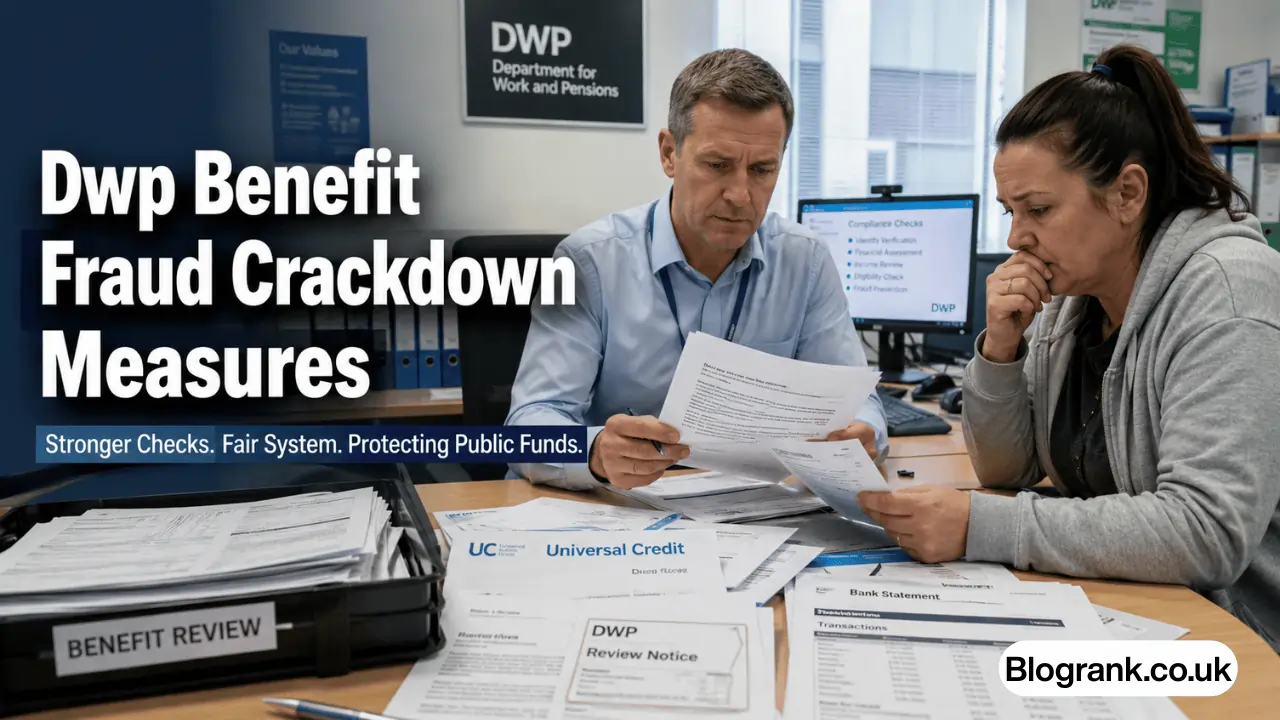
The DWP has increased the number of Targeted Case Reviews for Universal Credit claimants. These reviews are designed to confirm that claim details remain accurate and up to date.
During a compliance check, claimants may be asked to provide:
- Bank statements
- Proof of identity
- Housing and rent information
- Employment records
- Details about household members
Many reviews are routine and do not automatically mean fraud is suspected.
Common Reasons for Reviews
A review may happen because of:
- Changes in income
- Large savings balances
- Housing updates
- Inconsistent claim information
- Data mismatches between departments
The government believes these reviews are an important part of the dwp benefit fraud crackdown measures because they help reduce incorrect payments and detect fraud earlier.
Use of Technology and Data Analysis
Advanced Fraud Detection Systems
The government is investing heavily in technology to improve fraud prevention across the welfare system. Modern systems are now used to identify suspicious patterns and high-risk claims more quickly than traditional manual investigations.
Technology used in fraud detection may include:
- Automated risk scoring
- Data sharing between departments
- Digital compliance monitoring
- Account verification systems
- Pattern analysis tools
These systems are designed to improve efficiency while reducing the amount of money lost through fraud and administrative errors.
Recruitment of Additional Fraud Staff
Thousands of additional staff members have also been recruited to support investigations and compliance operations. The government believes combining technology with trained investigators will strengthen the overall enforcement process.
Penalties for Benefit Fraud in the UK
Financial and Legal Consequences
People found guilty of benefit fraud may face serious financial and legal consequences depending on the severity of the case.
Possible penalties include:
- Repayment of overpaid benefits
- Financial fines
- Temporary suspension of benefits
- Criminal prosecution
- Court convictions
In severe cases involving organised fraud or repeated offences, stronger legal action may be taken.
Importance of Accurate Information
Claimants are expected to report changes in circumstances as quickly as possible. Failing to update information about income, savings, employment, or household changes could lead to investigations or repayment demands later.
Concerns Raised About the Crackdown
Privacy and Financial Monitoring
Civil rights groups and welfare charities have raised concerns about the impact of financial monitoring and expanded investigations. Some critics believe the measures could affect vulnerable claimants who are already under financial pressure.
Others worry that automated systems may incorrectly flag genuine claimants because of technical errors or incomplete data.
Pressure on Genuine Claimants
Compliance checks and document requests can sometimes create stress for individuals who rely on benefits for daily living expenses. Welfare organisations continue to call for fair treatment and clear communication during investigations.
Despite criticism, the government insists the dwp benefit fraud crackdown measures are necessary to protect public spending and improve confidence in the welfare system.
How Claimants Can Stay Compliant
Claimants can reduce the risk of problems by ensuring all information provided to the DWP remains accurate and updated.
Important steps include:
- Reporting income changes immediately
- Declaring savings correctly
- Updating housing details
- Responding quickly to DWP letters or messages
- Keeping financial records organised
Most investigations focus on serious fraud cases rather than small administrative mistakes. However, inaccurate information can still result in repayment requests or temporary payment issues.
Conclusion
The latest dwp benefit fraud crackdown measures represent a major shift in how the UK government monitors and investigates welfare claims. Through stronger bank monitoring powers, expanded investigations, compliance reviews, and technology-driven fraud detection, officials hope to reduce billions lost through fraud and overpayments.
While supporters believe these measures are necessary to protect taxpayers and maintain fairness within the welfare system, critics continue to raise concerns about privacy and the treatment of genuine claimants.
As the rules continue to evolve, benefit recipients should ensure their information remains accurate and updated to avoid unnecessary complications during reviews or investigations.
FAQs
1. What are dwp benefit fraud crackdown measures?
These are government policies designed to reduce benefit fraud through stronger investigations, bank account monitoring, compliance reviews, and tougher penalties.
2. Can the DWP legally check bank accounts?
The DWP may work with financial institutions to identify accounts that appear inconsistent with benefit eligibility rules or undeclared savings.
3. What triggers a Universal Credit review?
Reviews may be triggered by income changes, savings levels, data mismatches, or routine compliance checks.
4. What happens if someone commits benefit fraud?
Penalties may include repayment demands, fines, suspension of benefits, or prosecution in serious cases.
5. How can claimants avoid DWP investigation problems?
Claimants should keep their information updated, report financial changes quickly, and respond to DWP requests without delay.
You May Also Read: Wasatha: Discover the True Meaning of Balance, Wisdom, and Moderation in Islam